The short answer
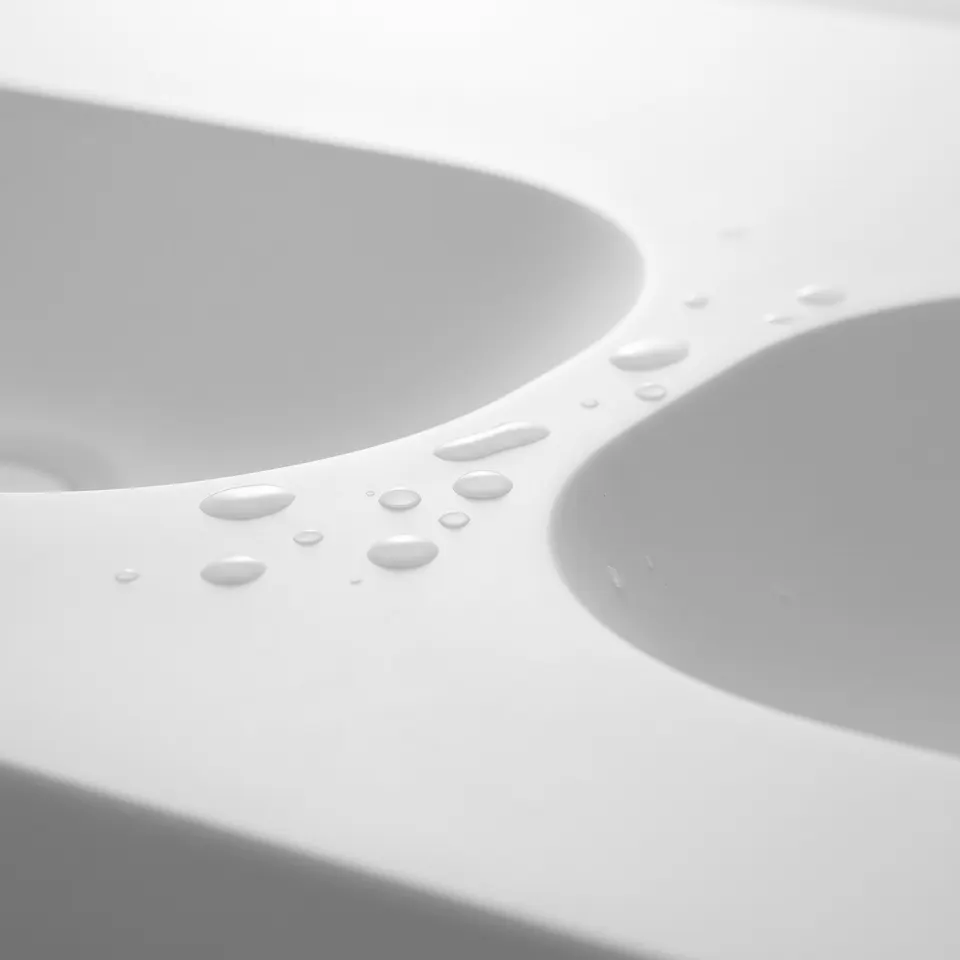
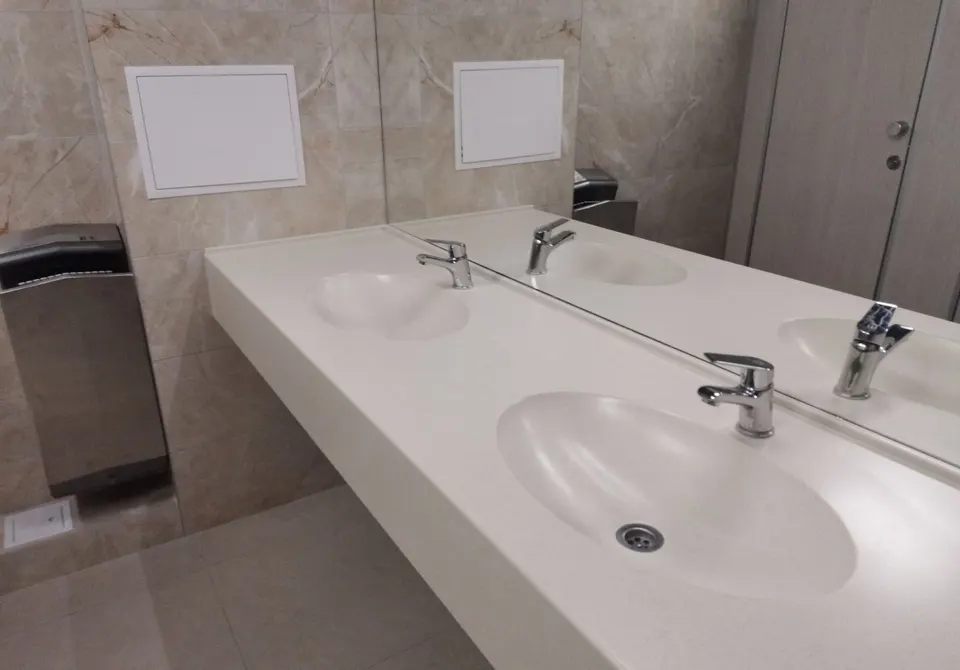
- Solid surface wins where the basin and top should be one piece, where the design has curves, and where you want to repair rather than replace.
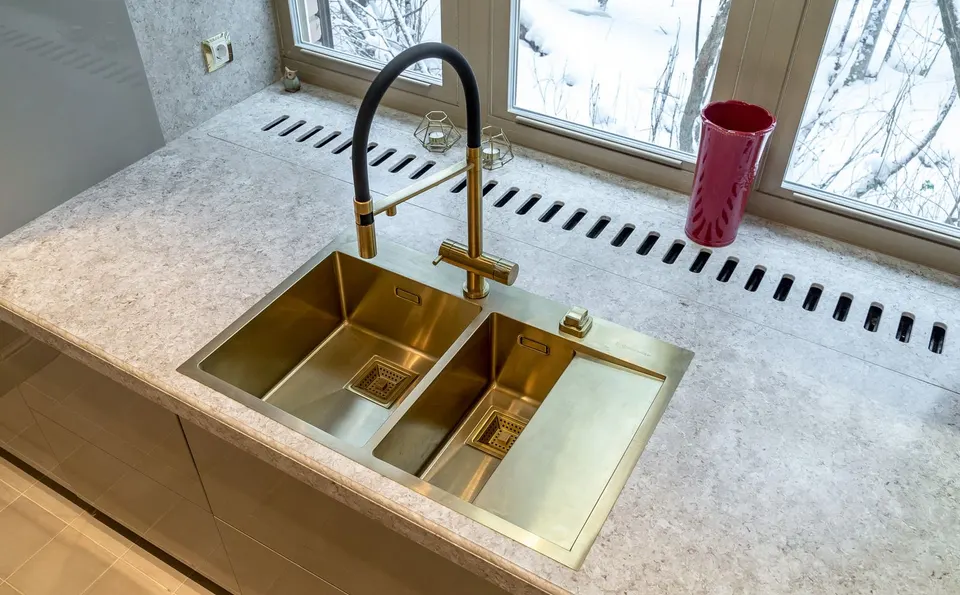
- Quartz wins on flat, heavy-use tops where scratch hardness matters most.
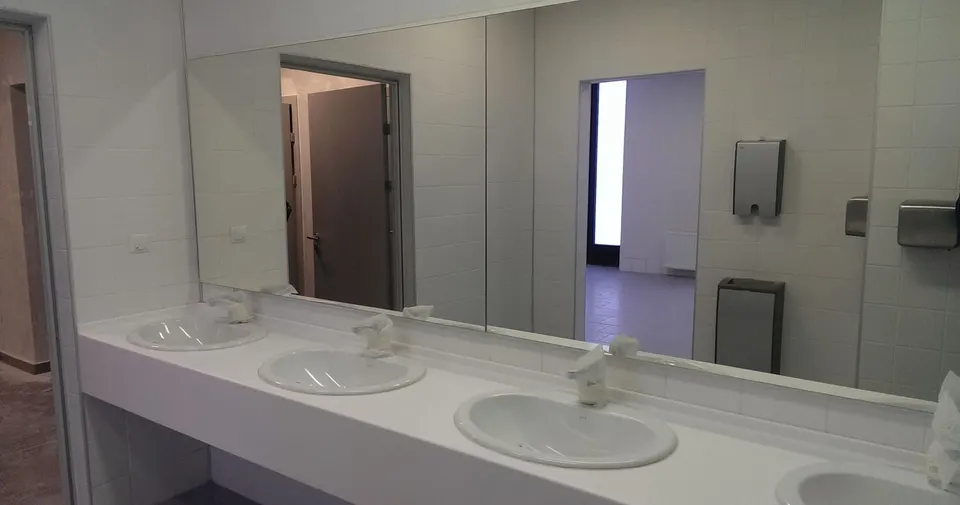
- Ceramic is the familiar choice for standard basins set into or onto a separate top.
- Cast marble is a moulded, gel-coated product, and it is repaired very differently from solid surface.
Solid surface vs quartz vs ceramic vs cast marble
| Solid surface (Akrilika) | Engineered quartz (AQ) | Ceramic | Cast marble | |
|---|---|---|---|---|
| What it is | Acrylic sheet, about 70% minerals | 92–95% quartz in resin, 20 mm slab | Fired, glazed clay | Moulded resin and mineral, gel-coated |
| Joints | Seamless joints | Butt joints, visible | Separate pieces, sealant | Separate pieces, sealant |
| Integrated basin | Yes, bonded without silicone | No | Moulded as one unit only | Moulded as one unit only |
| Curves | Thermoformable | No | Moulded shapes only | Moulded shapes only |
| Repair | Sanded out without visible traces | Specialist repair | Usually replaced | Gel coat repair |
| Heat | Dry heat 7A (180 °C); use trivets | Use trivets to avoid thermal shock | – | Check the maker’s data |
| Custom sizes | Fabricated to size | Cut from slab | Catalogue sizes | Catalogue or mould sizes |
For quartz, the figures above are from our AQ range. For ceramic and cast marble, compare the specific product’s data sheet.
Solid surface vs quartz for vanity tops
Both are strong choices for commercial washrooms. Quartz gives a hard, stone-like surface. The current AQ quartz slabs are 3200 × 1600 × 20 mm, with a lab Mohs hardness of 6 on the AQ Stone range. But the slabs are heavy (240–250 kg), the joints are visible, and the basin is always a separate unit.
Akrilika solid surface is less than half the weight per square metre: a 3660 × 760 × 12 mm sheet weighs 60–65 kg, against 240–250 kg for a 3200 × 1600 mm quartz slab. The top, upstand and basin can be one bonded piece. It is softer, so it scratches sooner, and those scratches can be sanded out.
Solid surface vs ceramic basin
A ceramic basin is a catalogue product with a fixed shape and a sealant joint to the top. That is fine for a single hotel bathroom. On a 12-position wash trough, or a basin run that has to match a bespoke top, solid surface lets you fabricate the whole run to size with basins bonded in. See wash troughs and basins.
Solid surface vs cultured marble (acrylic vs mineral cast)
This is the most common mix-up, especially in German-speaking markets, where cast marble is called “Mineralguss” and solid surface “Mineralwerkstoff”. Cast marble is poured into a mould and finished with a gel coat. Solid surface is a homogeneous sheet. The practical difference shows up years later: a scratched or chipped gel coat needs a coating repair, while solid surface is sanded back to the same material underneath.
Which to specify
- Integrated basins, troughs or curved counters: solid surface.
- Flat worktops where scratch hardness matters most: quartz.
- Standard basins on a stock top: ceramic.
Mixing them on one project is normal. Send the schedule and we will propose a material per item.