The short answer
Compact laminate (solid grade laminate, SGL) is a dense, water-resistant panel. It is the standard for toilet cubicles, IPS duct panels and lockers. It comes as flat sheets, and parts are machined and mechanically fixed.
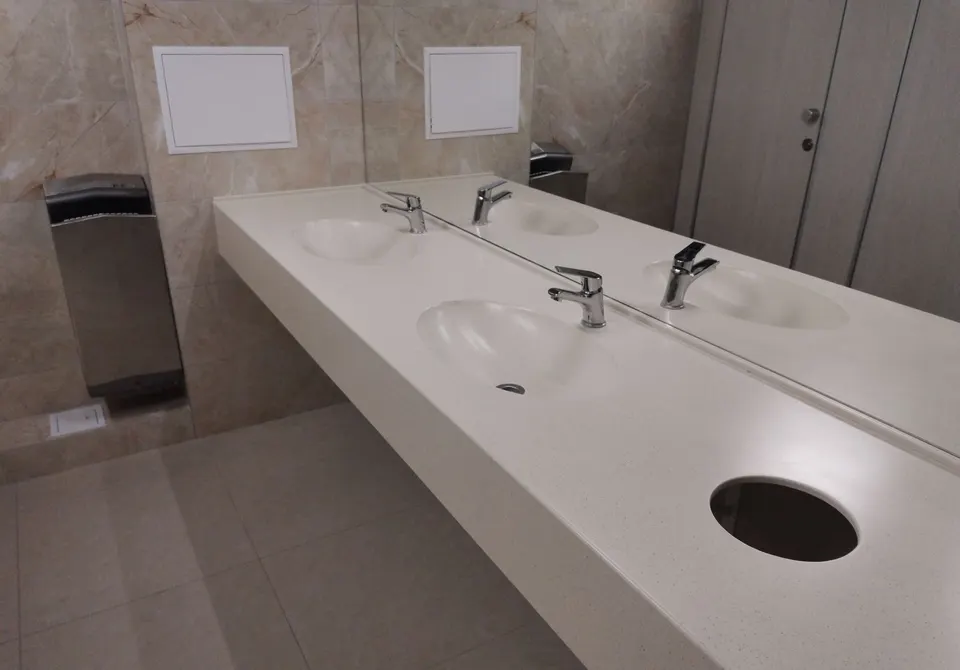
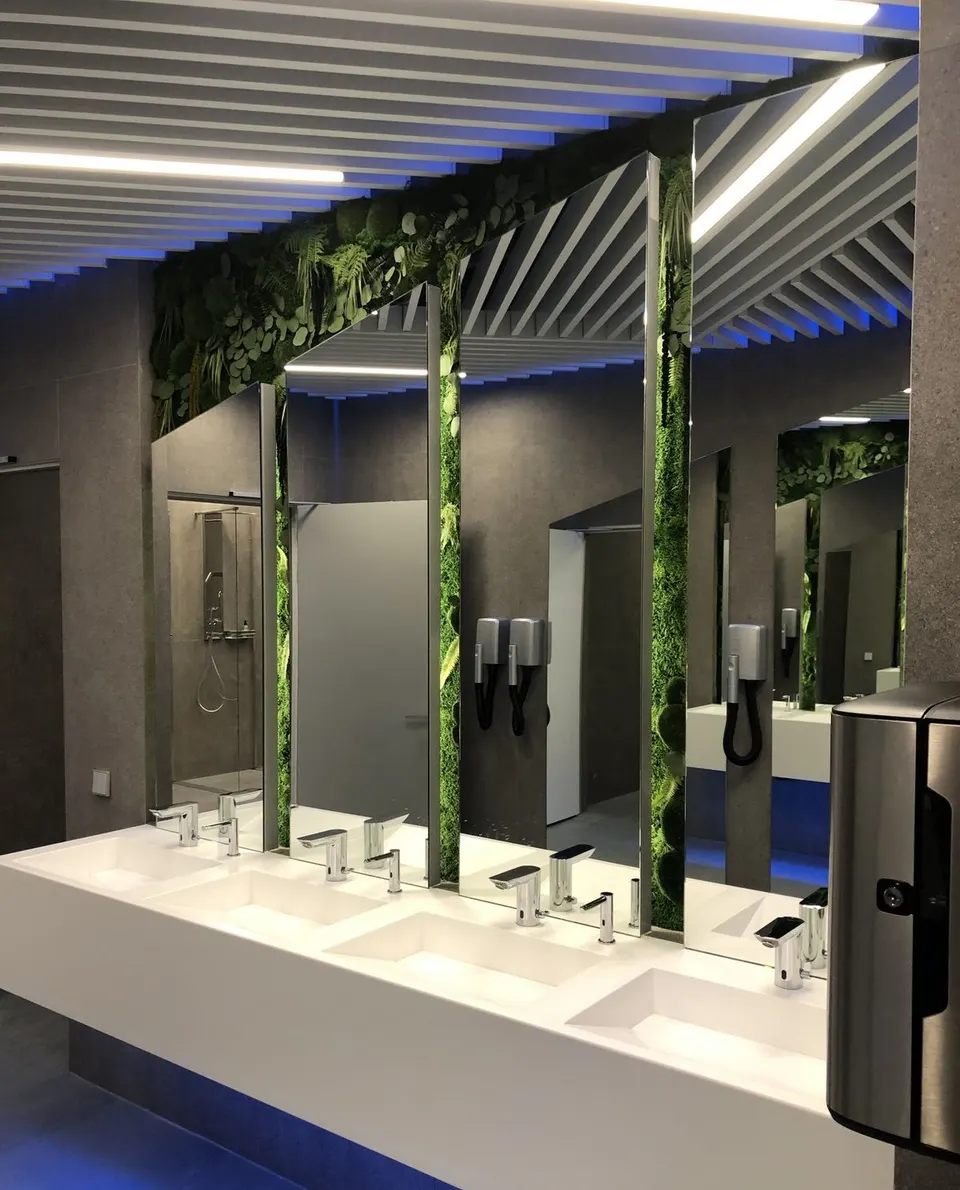
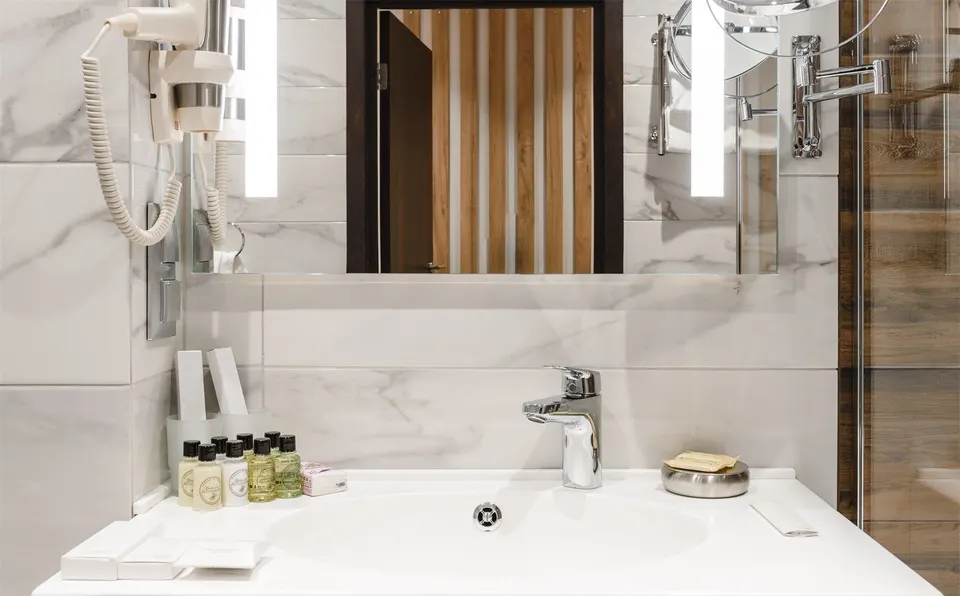
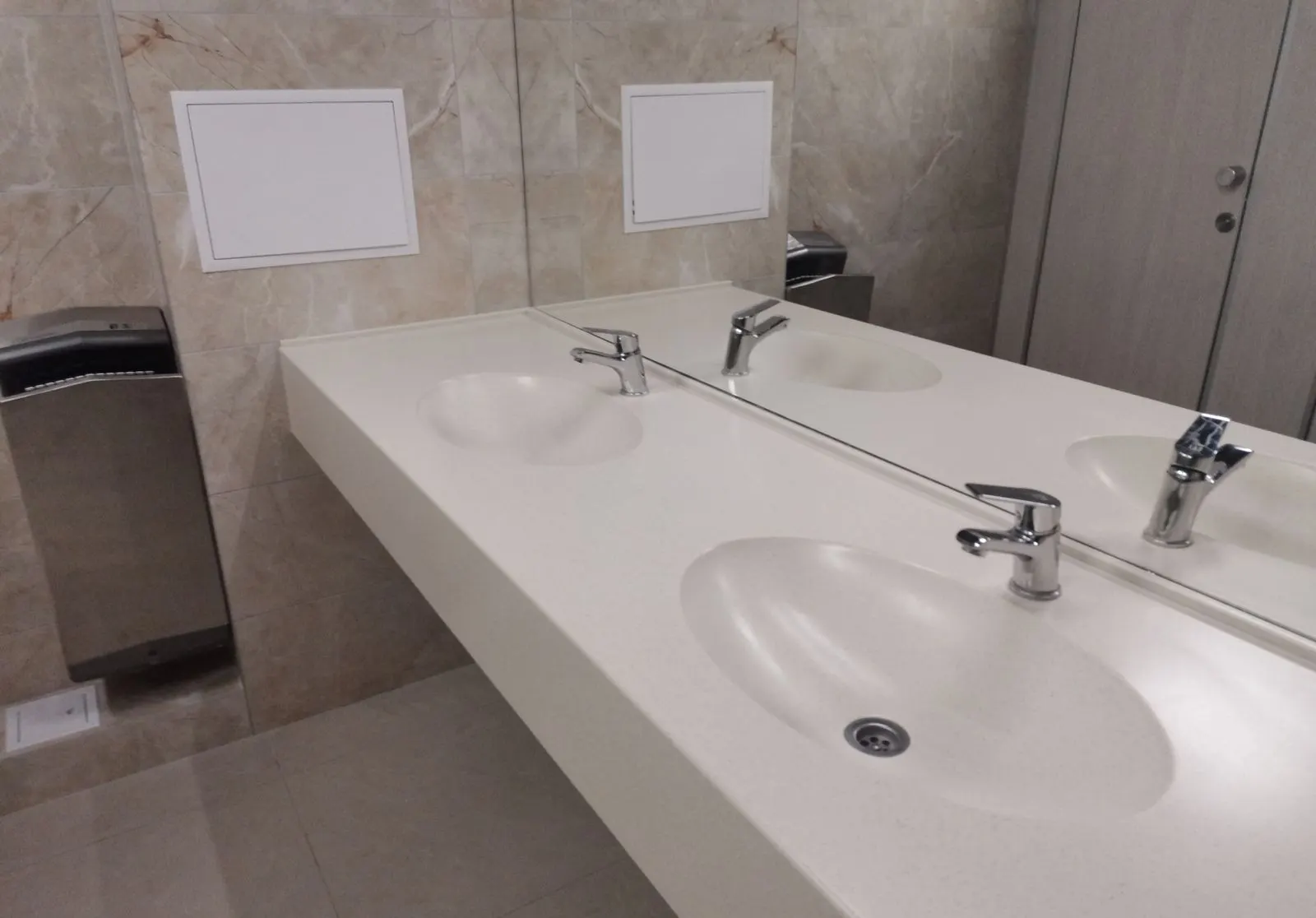
Solid surface is a sheet that is bonded, sanded and thermoformed. It suits the parts of a washroom where shape and joints matter: vanity tops with basins, wash troughs, splashbacks and upstands.
For most projects, the answer is both, each where it does its job.
Solid surface vs compact laminate at a glance
| Solid surface (Akrilika) | Compact laminate | |
|---|---|---|
| Form | 12 mm sheet, 3660 × 760 mm, bonded into any shape | Flat panels, machined and fixed |
| Joints | Seamless joints, sanded flush | Butt joints or mechanical fixings, often sealed |
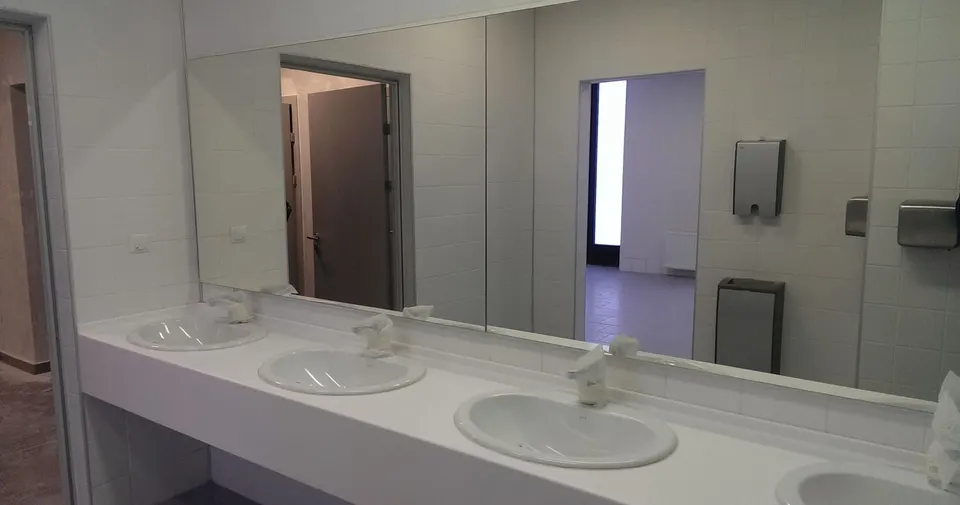
| Basins | Cast basins bonded under the top without silicone | Separate basin in a sealed cut-out |
| Curves | Thermoformable | Flat only |
| Upstands and splashbacks | Bonded with a coved junction to the top | Separate pieces, sealed junction |
| Surface damage | Scratches, chips and cracks removed without visible traces | Surface layer can’t be sanded through, so deep damage usually means a new panel |
| Colour | Through the full thickness | Decorative surface layer; core colour varies by product |
| Best use | Vanities, troughs, splashbacks | Cubicles, IPS panels, lockers |
For compact laminate figures such as fire class and impact resistance, check the specific manufacturer’s current data sheet.
Where compact laminate wins
Compact laminate is the right material for large flat areas that take knocks and don’t hold standing water: cubicle partitions and doors, IPS duct panelling, lockers and benches. It is supplied in large panels, machined quickly and fixed with standard hardware. For those parts, solid surface would add cost without adding much.
Where solid surface wins: the vanity and the trough
The vanity is the wettest part of a washroom. Water collects where the basin meets the top and along the upstand. On compact laminate, those junctions are sealant lines, and sealant ages.
A solid surface vanity removes most of those lines:
- Basins are bonded in. Cast A101 basins are fixed under the top with special adhesive, without silicone, so there is no gap at the rim.
- Long runs have no visible joints. A multi-position trough reads as one piece, and there is no joint to open up.
- Upstands can be coved. A thermoformed or bonded cove between top and upstand leaves no corner to clean.
- Damage is repaired, not replaced. A certified fabricator removes scratches, chips and cracks without visible traces. On a busy building, that often matters more than the first cost.
Akrilika is non-porous (0.27% water absorption after 49 days immersed, SGS 2016) and carries a 15-year limited warranty when fabricated by a certified fabricator and installed in a heated indoor room.
Lifecycle cost
Compact laminate often costs less at tender for the same flat area. Solid surface can earn its cost back through fewer sealant joints to maintain, and through repairs instead of panel replacement. The balance depends on footfall and the client’s maintenance regime. For a school or a transport hub, price both on the same schedule and compare them over the refurbishment cycle, not just at handover.
For the full washroom picture, see our commercial washroom specification guide and public washrooms.