Solid surface care and maintenance is simple if the cleaning team knows three things: which finish the surface has, which products to keep off it, and when to call a fabricator instead of scrubbing harder. This guide follows the manufacturer’s care rules for Akrilika and Apietra, written for facility managers and cleaning contractors in commercial buildings. Care instructions are also listed in downloads.
Daily cleaning
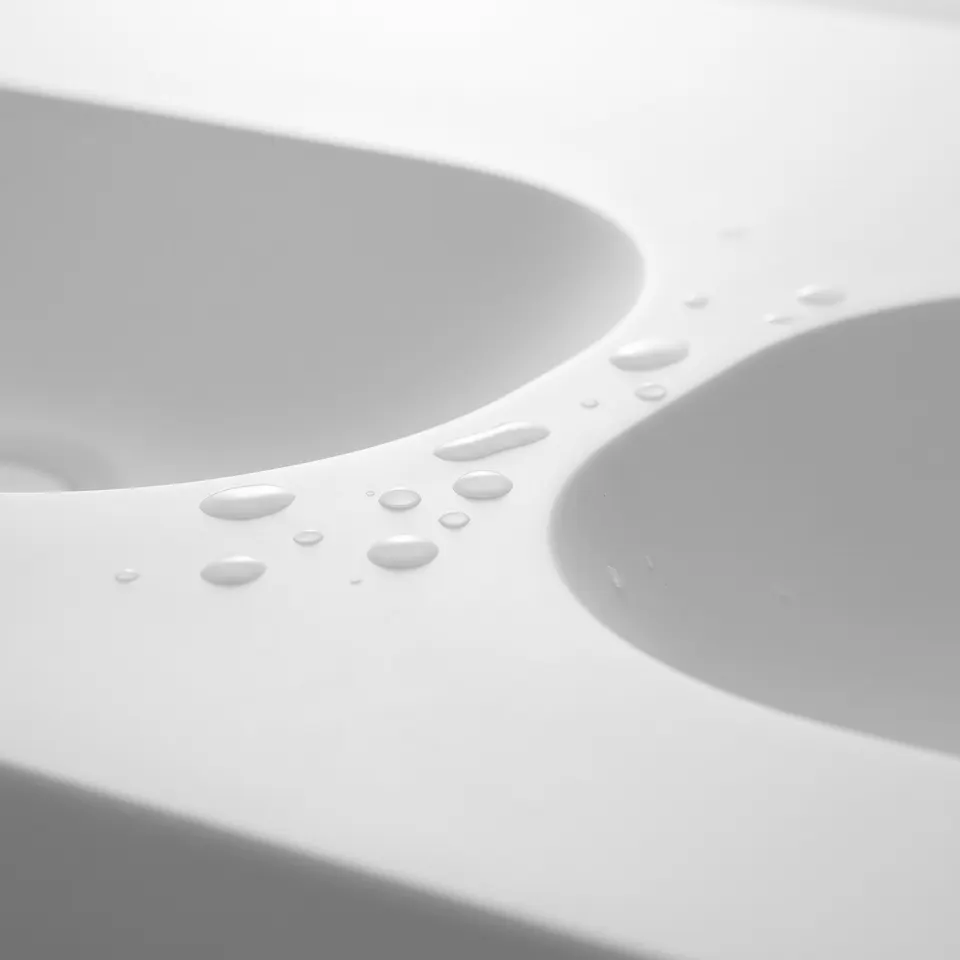
Use a soft sponge or cloth, a standard all-purpose cleaner and warm water, then wipe with clean water. That is enough for daily use in washrooms, receptions and worktops. The surface is non-porous (water absorption 0.27% after 49 days), so dirt stays on the surface.
Heavy soiling: choose the method by finish
The manufacturer gives a different method for each finish. Find out which finish was installed before the cleaning schedule is written:
| Finish | Method for heavy soiling |
|---|---|
| Matte | Abrasive cleaners containing acid |
| Semi-gloss | Bleaching paste or gel containing acid |
| Gloss | Non-abrasive bleaching gel only |
An abrasive used on a gloss finish dulls it, and restoring the gloss then needs polishing by a fabricator.
Disinfectants and chemicals: what the lab data shows
SGS tested Akrilika to ANSI Z124.3-2005. It passed with concentrated hypochlorite, 3% hydrogen peroxide, ethanol, 10% ammonia, 10% citric acid, urea and naphtha. Everyday stains such as ink, iodine, lipstick and hair dye stayed within a depth of 0.111 mm (limit 0.127 mm).
Handle with care:
- Solvents. Amyl acetate caused a superficial change, and acetone scored 3 out of 5 in ISO 19712-2. Nail-polish remover and solvent degreasers should not be used.
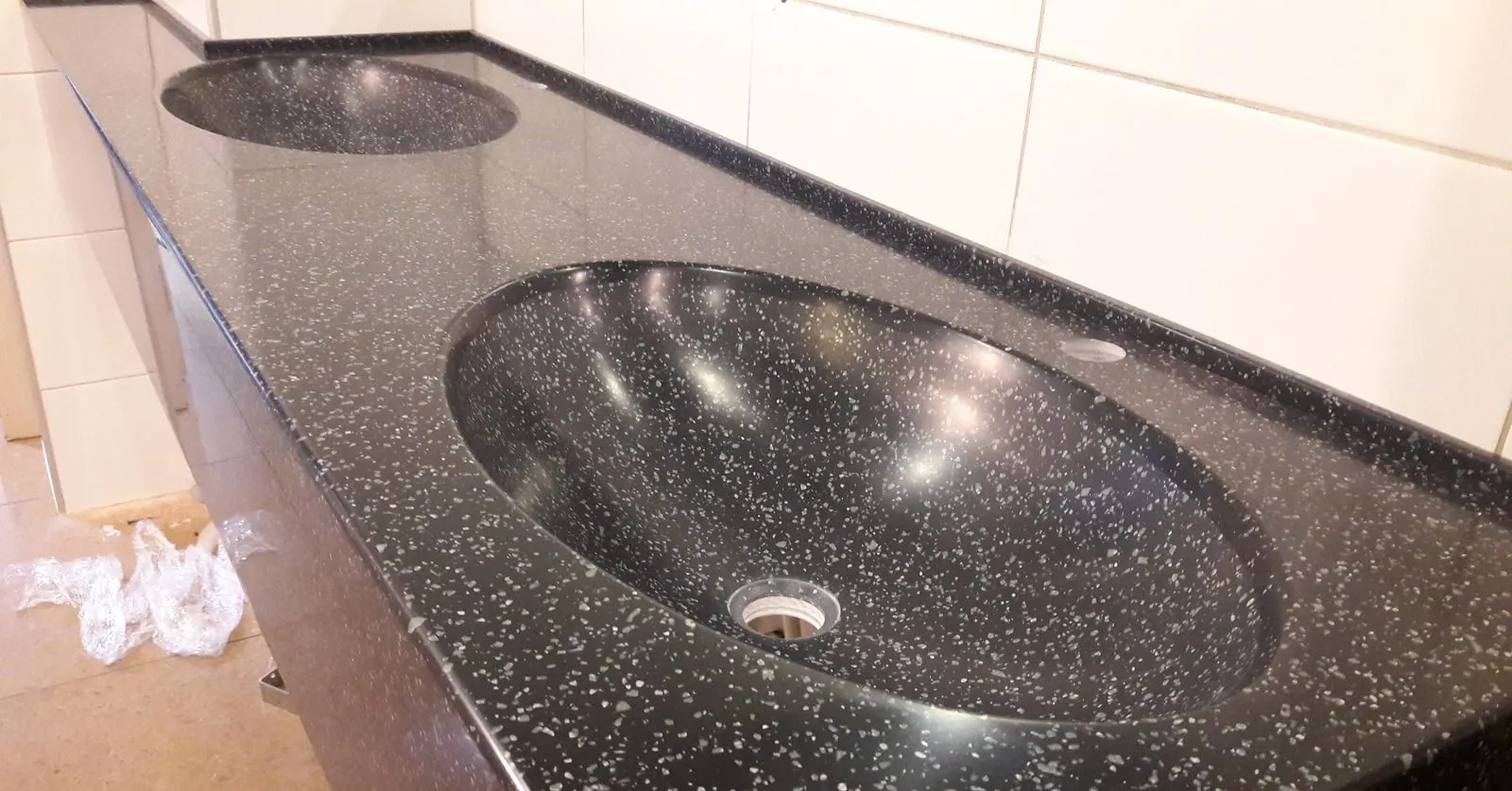
- Dark shades. The manufacturer notes that dark colours need more care and are not recommended for worktops in intensive use.
Heat and sinks
- Put hot pans and appliances on trivets, even though the dry-heat test reached class 7A (180 °C).
- Cut on a board, not on the surface.
- In acrylic sinks, run cold water before pouring boiling water, and keep water below 115 °C.
- Never fit a food-waste disposer to an acrylic sink. The vibration damages it.
- Do not stand or kneel on worktops or vanity tops.
A facility checklist
| When | Task |
|---|---|
| Daily | Soft sponge, all-purpose cleaner, clean-water wipe |
| Weekly | Check sink and basin outlets and the joint lines at upstands |
| When needed | Heavy soiling: use the method for the finish (table above) |
| Once a year | Walk the site and list scratches, burns and chips for one repair visit |
What can be repaired on site
The catalogue states that scratches, chips and cracks are removed without visible traces of repair. Because the colour runs through the full thickness, a certified fabricator sands the damaged area and polishes it back to the original finish, with the top in place. Repairs are paid work, done by a fabricator holding the Akrilika training certificate. The warranty excludes fabrication by firms without that certificate.
Typical repairs include:
- scratches and scuffs on counters and vanity tops;
- cigarette burns (the surface passed the ANSI Z124.3 cigarette test);
- marker pen and graffiti ink;
- chips on edges and small cracks.
What the warranty does and does not cover
Akrilika carries a 15-year limited warranty, and Apietra 10 years, for indoor installation in heated rooms. It covers manufacturing defects and the material’s properties. It does not cover normal wear, scratches, stains, mechanical damage, extreme heat, or appearance claims after the sheet has been cut. Plan maintenance around repair, not replacement. Contact us if you need a certified fabricator for a site.