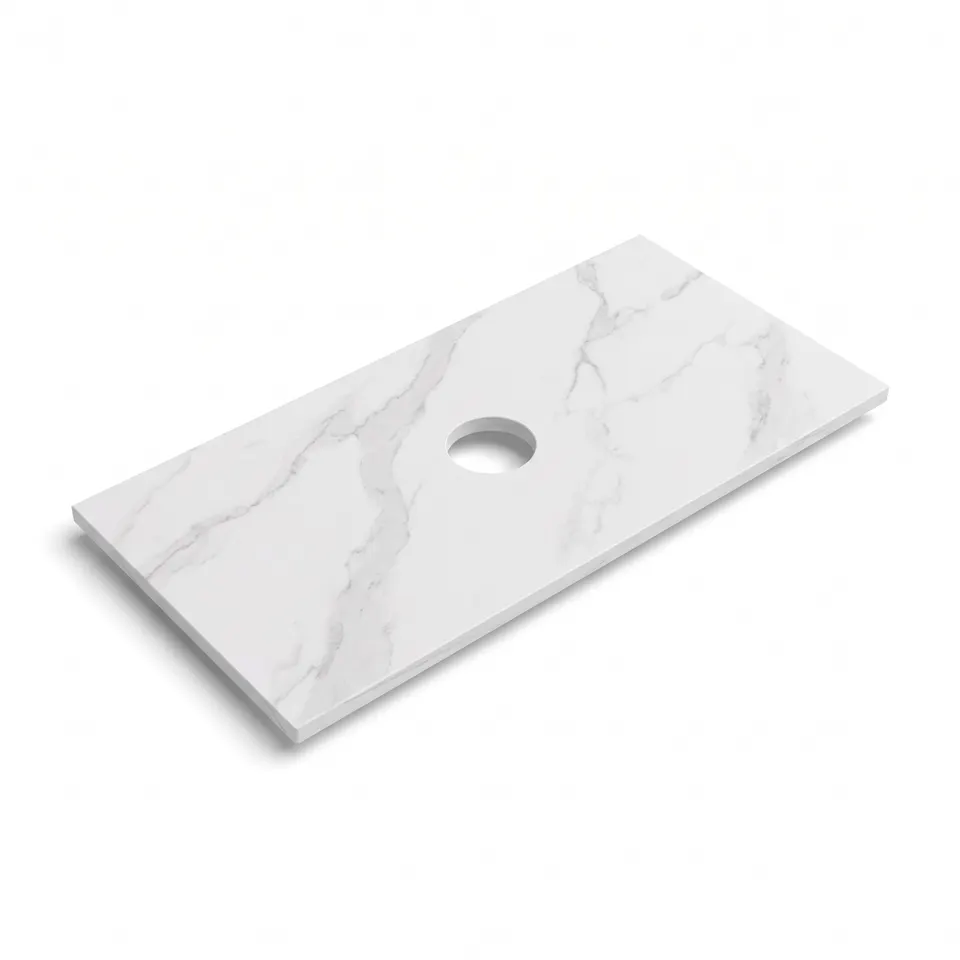
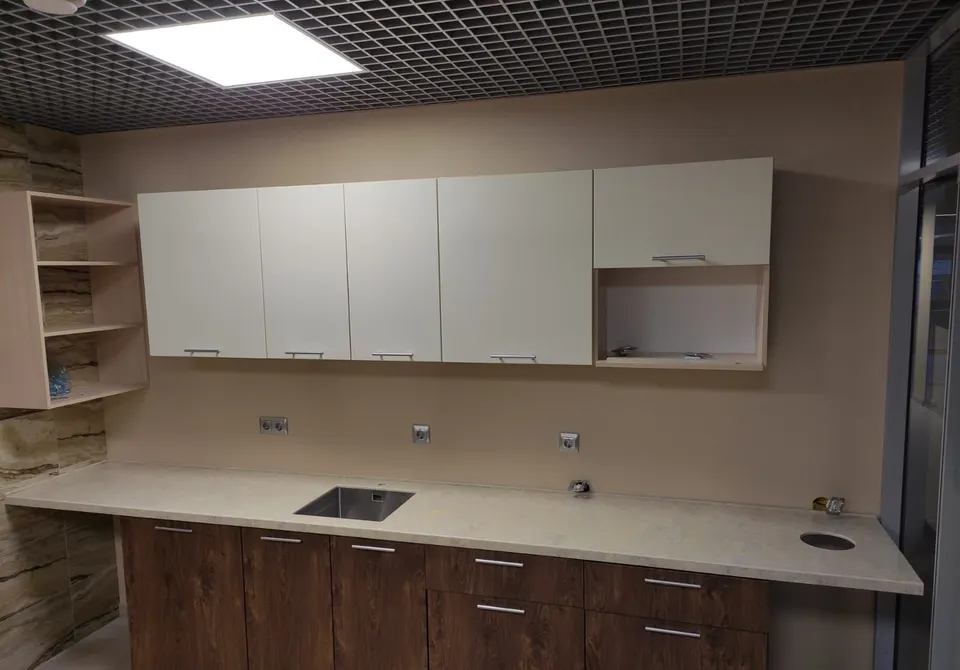
Solid surface samples answer the one question a screen can’t: what the colour looks like in your room, under your light, next to your other materials. The collections cover 130 acrylic colours: 73 in Akrilika, 5 new AR colours for 2026 and 52 in Apietra, plus the quartz ranges. Choose the ones you are considering from the tray below and tell us about the project. We send samples to project and office addresses across Europe.
Which sample format you need
The manufacturer shows two formats for every colour.
- 100 × 70 mm. The standard sample, for comparing solid and particle colours side by side and pinning to a sample board. Enough to judge tone and finish.
- 1220 × 380 mm. A large piece for veined decors, backlit designs and client presentations. A small chip can miss a vein completely. The large format shows how the pattern moves and where a joint will break it.
If you are choosing between two veined decors for a hotel series or a long counter, ask for the large format. It is the difference between approving a colour and approving a surface.
What to check on a sample
Colour in your light. Look at the sample where it will be installed, under daylight and under the specified lamps. Warm and cool whites that look identical on screen separate quickly on site.
Finish. Say which finish you intend to specify: matte, semi-gloss or gloss. The manufacturer gives a different cleaning method for each, so the choice also goes into the maintenance manual.
Dark shades. The catalogue does not recommend dark colours for worktops in heavy daily use. If a dark sample is on your shortlist for a counter or vanity top, consider it for fronts and panels instead.
Translucency. For backlit work, hold the sample over the planned light source at the planned distance. Thickness and LED spacing change the result. See Kristall translucent for the most translucent decors.
Pattern at the joint. With veined decors, place two samples edge to edge. The pattern will not continue across a joint, and it won’t on the finished job either.
Solid surface samples for architects and specifiers
With your sample request we can include the technical data for the collection and answer specification questions: which colours thermoform, which suit heavy use, and which decors make joints visible. For a full drawing review, see specification support.
Tell us the project stage. At concept stage, a spread of options helps. At tender stage, send the exact codes so the samples in your file match the specification.
Samples for fabricators and contractors
Fabricators use samples to agree the colour with the client before the order. Keep the approved sample with the job file. If a sheet order is split across batches, compare production sheets against it before cutting.
For large or repeated orders, remember that colour can vary between batches and within a batch. A sample confirms the code, not the batch. Order the sheets for the whole job together, and approve a production piece before fabrication. Once a sheet is cut, appearance claims are not accepted.
What happens after you order
We check the request, confirm the samples and format, and send them free of charge to the address you give. If a colour you asked for is no longer in the current collection, we tell you and suggest the nearest current code rather than send a discontinued one.
When the colours are settled, the next step is a quote: send quantities and drawings through the contact form. Browse the full range first in the colour library.