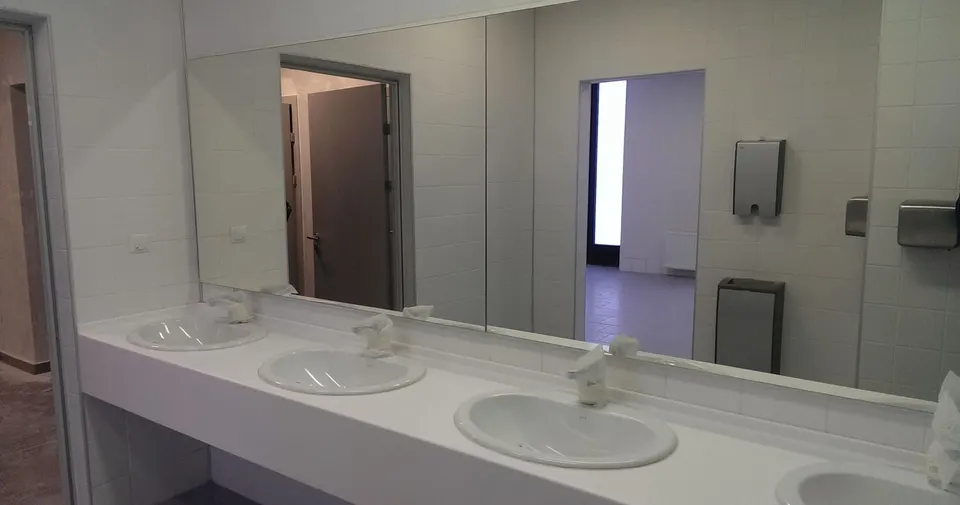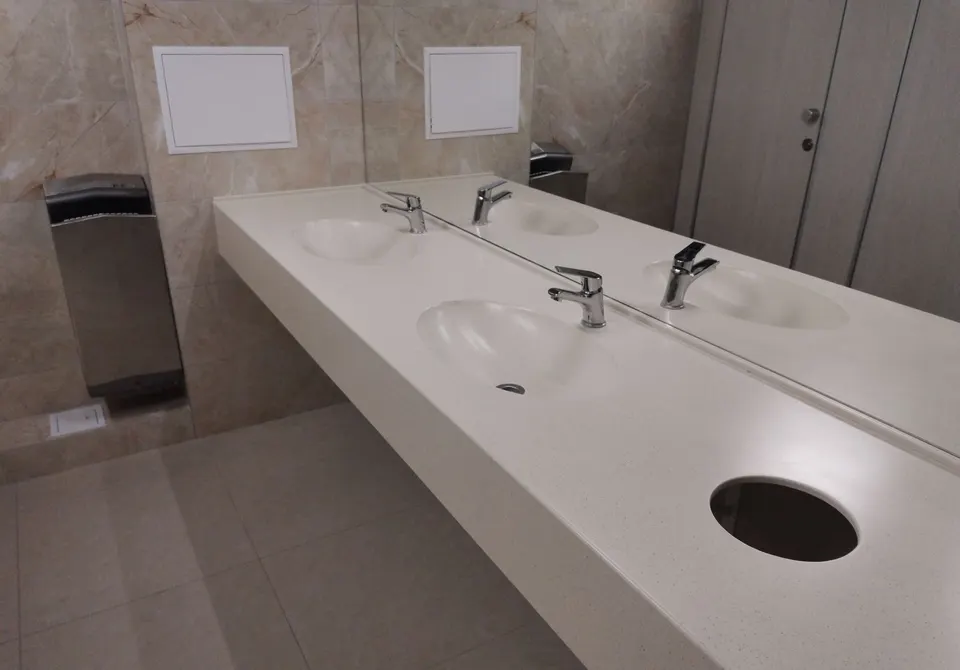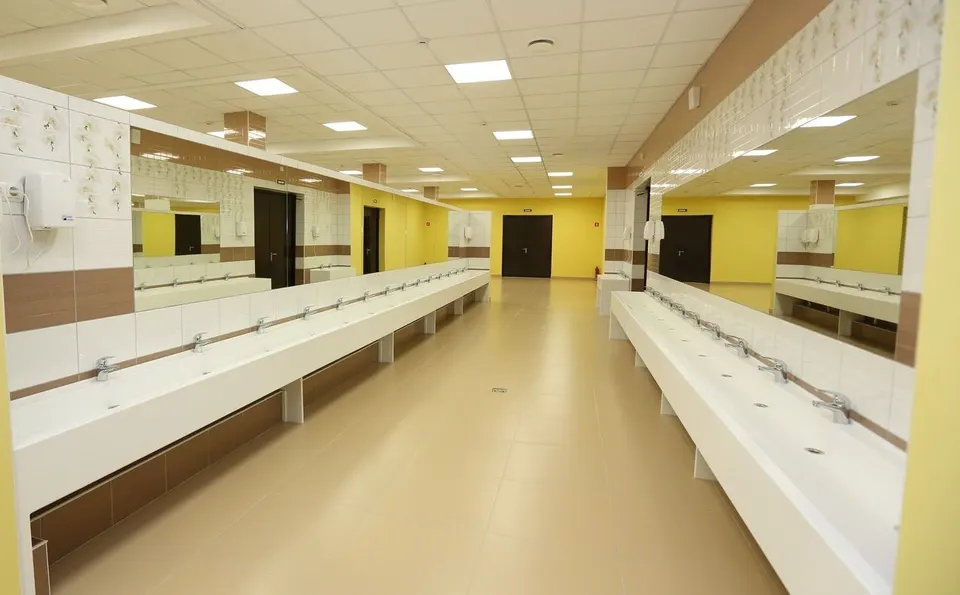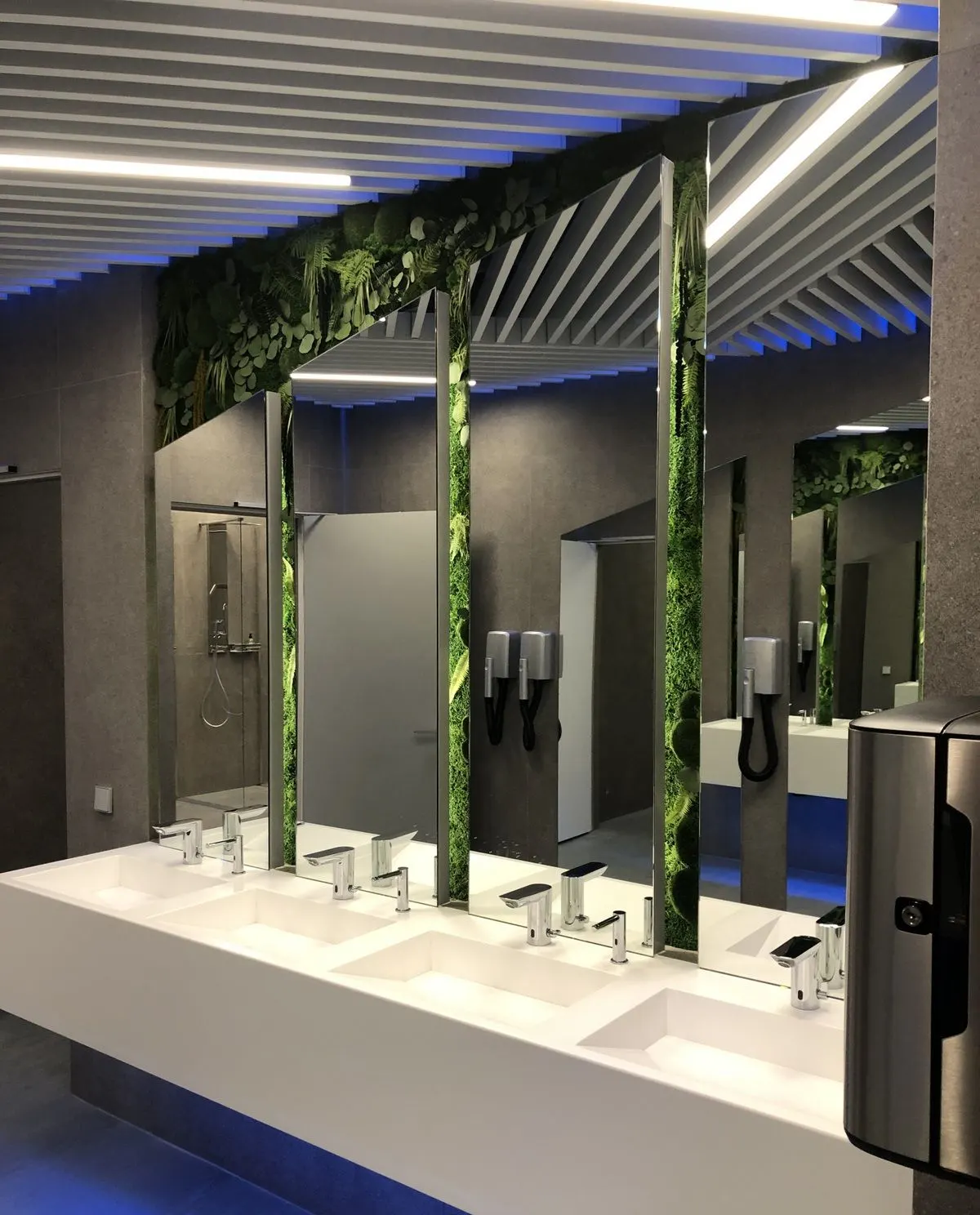
A solid surface wash trough is a multi-user basin: one long bowl shared by several people, fabricated from sheet rather than cast in a mould. That is why it has no fixed catalogue size: each one is built to the length, depth and tap layout on your drawing. Contractors use them in schools, offices, sports buildings and public washrooms, where a row of separate basins leaves more joints to clean and more parts to fail.
What a made-to-length trough is built from
Troughs are fabricated from 12 mm Akrilika sheet. Akrilika is 100% acrylic and can be thermoformed, so the bowl can have radius corners instead of sharp internal angles. Pieces are joined with adhesive matched to the colour code, then sanded and polished. The result has seamless joints with no visible gap.
The sheet limits the geometry:
- Length: one sheet is 3660 mm. Longer troughs are made from bonded pieces, and we show the joint positions on the drawing.
- Depth plus upstand: the sheet is 760 mm wide. A front, bowl and rear upstand cut from one width must fit inside that.
- Material: Apietra stone looks cannot be thermoformed. Use them for flat panels and fascias, not for radius-cornered bowls.
Planning a trough basin: length and users
We don’t publish a table of users and lengths, because the right answer depends on the building. A common planning figure is about 600 mm of trough length per user, measured between tap centres. Treat it as a starting point, not our specification. Then adjust it:
- Children’s washrooms: lower rim height and closer tap spacing. Follow your national guidance for the age group.
- Accessible positions: knee clearance and rim height set by local accessibility rules. Mark these positions on the drawing.
- Peak use: schools and stadiums empty in waves. Size for the busiest ten minutes, not for the daily average.
- Tap type: wall-mounted taps keep the deck clear. Deck-mounted taps need holes, cut to your tap centres during fabrication.
School wash troughs and commercial trough sinks: what to send
A drawing lets us quote accurately first time. It should show:
- Overall length, depth and rim height.
- The number of taps, their centres, and whether they are wall or deck mounted.
- Waste positions and type (individual wastes or one outlet), and the fall you need.
- How the trough is fixed: brackets, a frame, a vanity carcass or a wall with a bonded upstand.
- Upstand height, and any return ends or side panels.
- Colour code, and the quantity of identical troughs.
If you have only a sketch, send it with these values. We will point out anything that needs a technical drawing before production.
Colour, batches and series
A single trough runs the whole wall, so colour consistency matters more than it does with separate basins. Colour can vary between production batches. For a project with several washrooms, order all the sheets together so every trough comes from one batch. With veined decors, expect a break in the pattern at every joint. Solid and particle colours avoid that problem.
Dark shades are not recommended by the catalogue for surfaces in heavy daily use. For busy washrooms, mid and light tones are the practical choice.
Care and repair in a busy washroom
Solid surface is non-porous. The manufacturer states it does not support microbial growth when cleaned properly. Daily cleaning is a soft sponge and a household cleaner. Heavier soiling needs the method matched to the finish (matte, semi-gloss or gloss) described in our care guide.
When a trough is damaged, it is usually repaired rather than replaced. The manufacturer states that scratches, chips and cracks can be removed without visible traces. A certified Akrilika fabricator does the sanding and polishing as a paid service.
The limited 15-year warranty on Akrilika applies to installations in heated indoor rooms, fabricated by a firm holding the Akrilika training certificate. Unheated changing blocks or outdoor washrooms fall outside it.
Trough, vanity top or separate basins?
- Trough: fewest parts and one continuous bowl, easy to wipe along its length. Best for schools and high-traffic washrooms.
- Multi-basin vanity top with cast basins: each user has a defined bowl. Suited to offices and hotels.
- Separate basins: the most flexible layout, but with the most joints and fixings.
Not sure which fits the brief? Send us the layout and we will suggest the option with the fewest joints for the space.